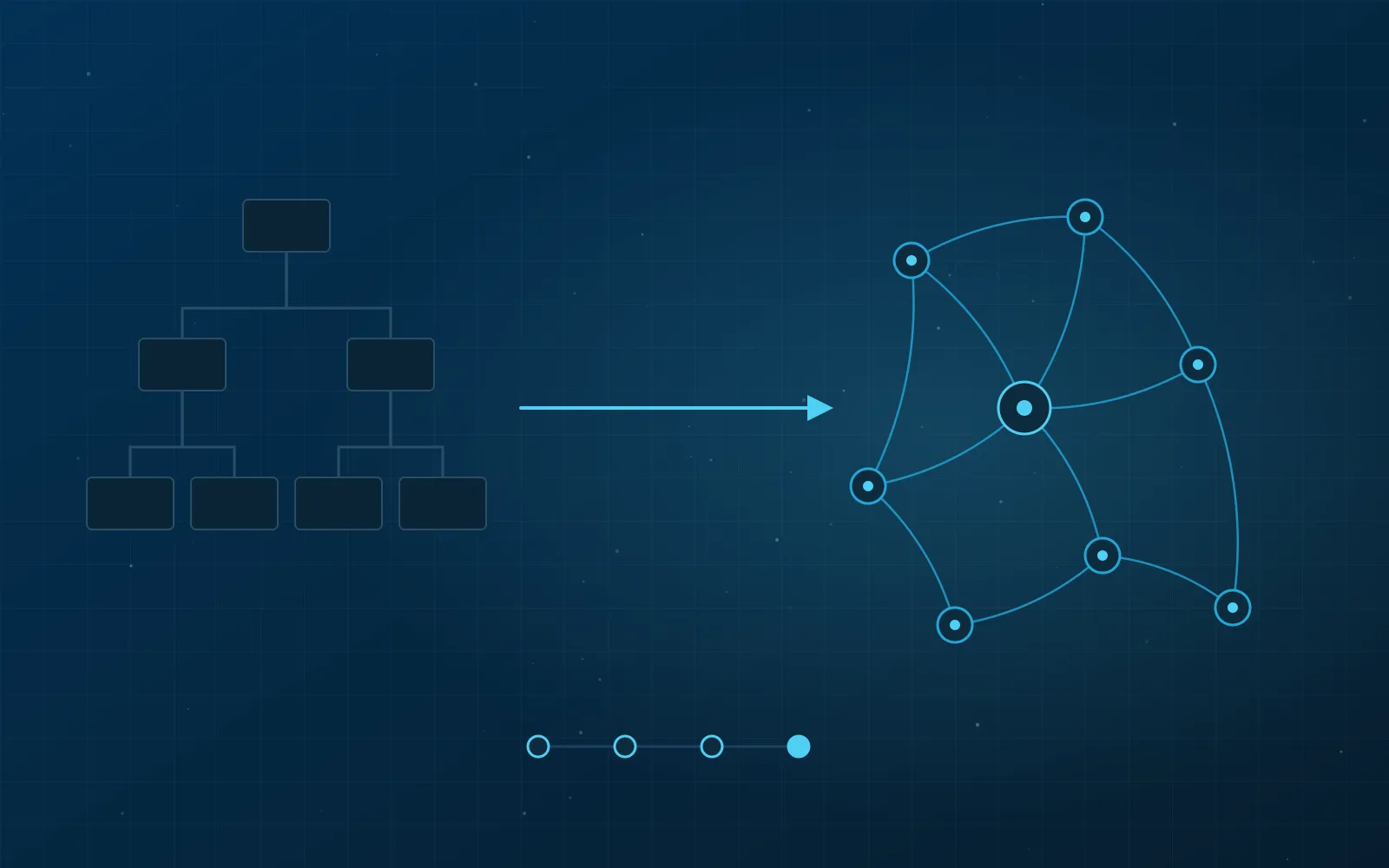
Most AI initiatives start with a technology question: which model? Which platform? Which use case? That is understandable – and usually the wrong first question.
Built for expensive software
Many organisations have grown around an assumption hardly anyone says out loud: software is expensive, slow and risky to build. A lot follows from that. You buy large standard systems and adapt your processes to them. You bundle requirements for months, because every change is a project. You move reconciliations back and forth through Excel and email, because a small integration is not worth it. You separate the business and IT sharply, because translating between them is expensive.
When applications, integrations and automation can be created in days, many of these decisions no longer hold. Not because they were wrong – but because their foundation has gone.
The real hurdle
The biggest challenge is therefore rarely implementing new technology. It is questioning existing assumptions and overcoming established patterns: does this approval process really need three levels, or did it only exist because mistakes used to be expensive to fix? Does this report have to be monthly, or was that just the rhythm of the batch run? Is this role a business necessity, or does it bridge a gap between two systems?
Introducing AI without asking such questions automates the old – faster, but not better.
How I work on it
I work across strategy, organisation, architecture and execution: analysing existing models, identifying where they should be simplified or fundamentally redesigned, defining a pragmatic target state and helping teams actually implement the change. Staying in touch with technical reality matters to me – a target architecture nobody can build is not a strategy, it is a slide.
Rethink the model. Transform the organisation. Turn strategy into execution.