At the beginning of October an accounting module came together on the mahevi platform in one week: cash-basis income-and-expense accounting with builders for quotes, contracts and invoices, compliant invoicing with mandatory details, numbering, ZUGFeRD e-invoices and digital signatures, plus receipts captured by photo, dunning, recurring invoices and a VAT return overview. Multi-tenant, in production.
That sounds like a story about AI. It is really a story about building blocks – and about cost.
A week of assembly
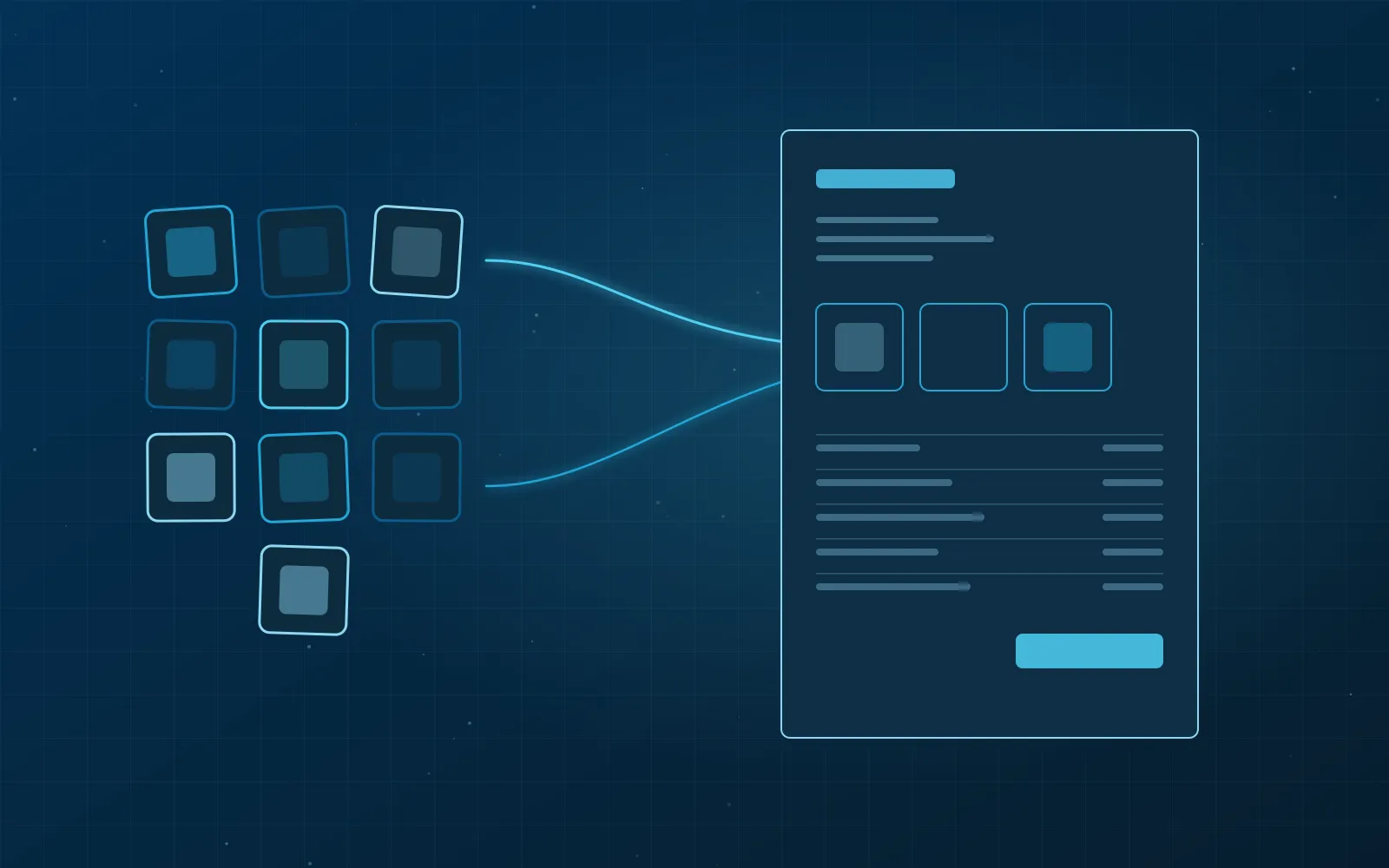
To be honest, the week was less new development than assembly. Tenants, permissions, two-factor sign-in, file storage, email with templates, PDF generation, a signing certificate, image processing and a page editor were already there, finished and proven. What was new was the domain: what an invoice, a quote and a contract are, which details are mandatory, what must never change once finalised and how amounts in cents are rounded. AI accelerated the implementation in between – it did not provide the model or the building blocks.
What has shifted
Invoicing software has long been a textbook case for “buy, don’t build”. The domain is manageable, but the implementation took months. Those months were the reason for the market.
When an organisation has good, reusable building blocks and AI-assisted implementation takes days, what remains of a standard product’s price is mainly one thing: the knowledge of what the software has to do. That knowledge is often in-house – it was simply too expensive to turn it into software.
What it does not mean
Not every company should build its own accounting. Operations, liability, maintenance and legal changes still cost money. And without the existing building blocks it would not have been one week.
But the line between “buy” and “build” is being redrawn – and it depends less on programming capacity than on two questions: do you understand the domain? And do you have the building blocks from which something new can be assembled quickly? With both, you build software around your processes instead of bending your processes to standard software.